If there is ever a time and date when we try to be our most optimistic best selves, it is January 1st. I personally am not one for resolutions but more about recommitment. And about promising myself positive self-talk to build my resilience and perseverance to meet our values.
Over the last few weeks, I have been reading a couple of books that have in many ways made positive self-talk more difficult. They have identified how powerless we are to make the economic and the political system work for us. Firstly, I read Rory Stewart’s ‘ How not to be a politician’ and James O’Brien’s’ How they Broke Britain. Both give detailed insight as to how Westminster and politics generally work in this country. Or don’t. I suppose there was nothing in them that surprised me, but lots that saddened me about what drives political decision making.
Thinking about schools and education specifically, like many of us I had hoped that as we materialised out of COVID lockdowns, we would take the break to create schools and a system that empowered agency and global citizenship, that challenged our high accountability and data driven approaches and above all recognised that creating greater equity in the system is the way to raise standards. We have not!
I even doubt if OFSTED and the DFE will really alter the accountability framework despite the furore over the tragedy of Ruth Perry. It is important to remember that this awful situation is just the tip of an incredibly large disempowering iceberg. I know from more decades of school leadership than I care to admit to, the impact of not just OFSTED but that accountability framework has had on heads and the wider staff. It has shaped the whole way we run education. I have worked with many great colleagues who have found themselves at risk of losing their jobs, or under such mental stress that they become incapable of continuing. We are not in a position where we have an oversupply of great school leaders and teachers about to enter the profession. What waste!
Sadly, we lost one of our great educationalist just recently – Tim Brighouse. In a Guardian article about his book with Mick Waters – ‘About Our Schools’ . he said this.
“I don’t want anyone thinking we are just romantic oldies looking back at a forgotten period,” he says. “Many things about that postwar period were poor. Teaching wasn’t good enough and there was a less clear definition of what a good school was.
“But reforms that helped to bring improvement have been poisoned by over-emphasis on autonomy and a devil-take-the-hindmost approach. Accountability has gone too far and become punitive.”
Likewise, I do not want to be seen as OFSTED bashing. It takes time to be a successful school leader and through coaching and collaboration we should put our emphasis on support not narrow measures of accountability and shaming. Accountability and benchmarking schools is one thing. School improvement is something different. OFSTED is not about school improvement.
But this is not really the heart of what I wanted to write here in this blog. Yes, I was disheartened by the two books, and likewise I am disappointed by the lack of vision and ability to take the COVID break as a chance to refresh and recalibrate what we do. I am very privileged to be in a range of schools up and down the country and across the world who have built a spirit of hope and innovation. Our mission at Global Spirit Ed is to support schools with this journey, bring them capacity but most importantly inform the system through robust analysis and research about a different way to achieve the best future for young people.
So, borrowing one of Kunskapsskolan’s values – ‘Life Is What You Make It’ I would suggest we cannot sit around and wait for a window of change. We have to make it so, in our own schools and then across the network and then the wider system. Going back to Tim Brighouse, a few years ago he delivered a lecture at the Whole Education Conference entitled, ‘Seizing the Agenda; Finding the Gaps in the Hedge.’ It is in that spirit that I frame our New Year Resolution. We have little chance of affecting immediate policy nor should get depressed, angry, or frustrated at the lack of vision and progress to build a first-class system in the UK. We should use our positive energy to make it happen in our school for our young people , work collaboratively to support each other, and then inform the system from a position of strength.
So here we go as far as re- commitments for the New Year.
RE- Commitment 1: Build a robust coaching climate for students and teachers. It is the key to flourishing.
We all know the importance of feeling we are in charge of our destiny, that someone values us even when we get things wrong and know we are all different. So, it is with young people and thanks to the wisdom of those founders of Kunskapsskolan, we know the tools we can deploy to make it so. But at the heart of that is effectively providing all young people the time to be coached. So, let us commit to making this work in all our schools so all our learners feel valued and have route to success. When we talk about equity …we cannot hope to achieve that without knowing where students are and what they need. Its an essential element of bringing a sense of belonging.
We have this year supplemented this by bringing the principles of Positive Psychology from Mindspan into our coaching programme. Getting young people to develop a growth mindset by building positive self-talk into their coaching discussions is essential. We are able to back this up further with the Mini Minds Programme. We look forward to seeing the impact from the research pilot.
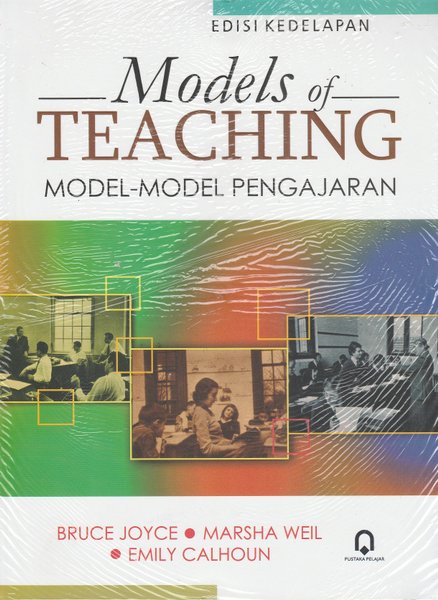
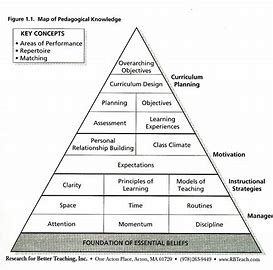
Over the last few years, we have seen how that coaching culture with students is equally important for all our staff in school. We have seen how it is crucial not just for personal development but also as a school strategy to improve our teaching and learning. This last year I have been really taken by the concept of repertoire and how professional development and coaching is about helping us slowly increase our skill set. The work of Bruce Joyce and Jon Saphier have been really helpful here.
As we enter what will be another year of stretched budgets and difficult choices, making space for continued effective professional development is essential. I believe by structuring the school day and contact time with coaching and professional development at the heart of our thinking and drawing on the collaborative network and expertise in Global Spirit Ed, we can improve the quality of teaching and learning, increase the professionalism and wellbeing of our colleagues. Please do not make that easy decision to balance your budget by reducing professional development. Rather use the network to provide the support and development you need. As research engaged schools you have more potential internally than you can imagine.
Re- Commitment 2: Value and Measure what is important in our schools.
We all know that the culture of our organisation is a critical determining factor in the success of our organisations. They need to be great places to learn and great places to work. I am excited by the work we have started with Professor Jordi Diaz Gibson from Barcelona. Being able to measure the critical elements of culture diagnostically and forensically and then to be able to address this set of root variables will be a better way of looking at what we achieve in our schools. School improvement is the work of every stakeholder in the school family.
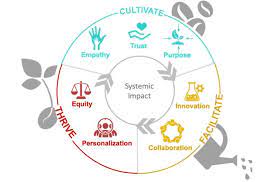
If we are serious about equity and personalisation, we need to realise that these can only be achieved by creating a culture where agency occurs, and where collaboration and innovation can take place. Such is the inequity in our system and the lack of personalisation that only taking bold innovative steps will help us achieve them. So, at the core of a school, we need trust, empathy, and a common sense of purpose. You are never innovative in a climate where we cannot trust those that lead, and where everyone cannot share a common sense of where the school is going and what it stands for.
Going back to Brighouse and Waters and ‘About our Schools’ in the section on Leadership they write
“ As we have seen there is much talk about school-led and self-improving school systems through what might be called ‘transformational leadership’ , yet the reality for may individuals is very different. Leaders in schools are expected to deliver on a template laid down centrally, sometimes interpreted and modified locally, which inclines them to transactional leadership. They experience a high stakes national accountability regime which carries severe institutional and personal penalties for falling below expectation. The layers of scrutiny have increased, and the managerial and regulatory aspects of leadership are so heavy that they overwhelm those who wish to be the sort of leaders that encourage staff to try something new and speculate aloud about what the school can achieve next – in other words those who exercise the flair and professional judgement that is the true currency of successful school leaders. “
I genuinely believe that the ‘School Weaver’ tool and the concept of creating a holistic learning ecosystem give a framework that enables leaders to identify the foundations for school improvement that cn deliver personalisation and equity at its core.
Recommitment 3: Develop the core theories of action that enables quality first teaching through adaption and a core set of nurture principles.
One of the high spots of the work of Global Spirit Ed is the working with our Special Schools and those offering Alternative Provision. However, the spectrum of learning need and neurodiversity means that all so- called mainstream schools have to increasingly increase their repertoire o f strategies to meet need in their schools. We have moved from a time when we wanted to include as many young people as we could in mainstream to a time now when these special and alternative schools and provision are overwhelmed by requests for admission.
I will not rehearse the reasons such as high accountability, development delay coming out of COVID and wider pressure on families and their finances. Rather, I would suggest that this is the main area of teaching and learning that needs addressing. We rightly have moved from differentiation to adaption in meeting all classroom needs and that means strengthening our skills in modelling, scaffolding and personalisation/agency. However, there is a full range of nurturing strategies that can be built into these theories of action that all schools must address . Working with Nurture International we intend this year to develop our theories of action around their six nurture principles and strategies.
The figures for metal health of our students, increased non-attendance and higher exclusion and suspension, demand action. But going back to the premise of this paper, namely ‘Life is what you make it,’ we cannot wait for additional resource or provision to come flying over the horizon any time soon. We can and have to make a difference ; we can learn from our special provision colleageus and extend our coaching and agency strategies to build a new way. Failure to deal with the problem leads to real workload implications for a school dealing with quite complex behaviour and low progress by the few to the detriment of the majority.
Recommitment 4: We need to prepare our young people for this chaotic and rapidly changing global society.
How much talk has there been about 21st century learning? For how many years have we identified a range of skills that underpin the content of the curriculum, but honestly can we say we have really delivered. Failure to do this now places our young people and the whole of our society in a perilous position. Whether it is the impact of global warming, the challenge of social media or the risk of disengagement from our democracy principles, this is not just something we ought to do, it is something we have to.
Elliot Eisner talks about three elements of a curriculum – explicit, implicit and the null curriculum. It is this last element that worries me. We know we have to teach an explicit level of content; we seek to build implicit values into our schooling but there are many uncomfortable areas we do not even touch or are to even aware of. Ten years ago, I was inspired by the work of a young teacher in Los Angeles who was give an ‘unteachable class ‘ interwoven with issues of racial prejudice and gang culture. Erin Grunwell was unprepared for the background of these students and spent her time understanding the students and starting where they were. The impact of her work led to her students contributing to a book and a film known as Freedom Writers. This was brought back to me recently when I shared a platform with Craig Pinkney who works in the West Midlands challenging issue and young people facing knife crime and violence. We underestimate the impact of ‘county lines and these gang cultures in both urban and rural areas like Norfolk at our peril.
This is not just a school problem to solve. It needs a multi-agency approach. But as teachers we need to help students understand this environment and have the skills and motivation to go elsewhere.
But there are other elements of the null curriculum to address. Most of us grew up expecting to have one job and career, but then more recently realising that people will have a range of jobs in their lifetimes. However, it is more complicated than this. Young people will enter a workforce where they have portfolio careers, work in scrum teams, navigate the gig economy and make life choice decisions about how they want to work. G Williamson McDiarmid and Yong Zhao in their book ‘Learning for Uncertainty’ highlights the challenges of this changing work model. In particular how flattening the business hierarchy enables the development of social knowledge where there is collaborative development of solutions and innovation. They write:
“ Unfortunately, the view of knowledge creation does not seem to inform the organisation of learning in most schools. The unit of learning in typical education institutions remains the individual. Learning is universally assessed individually “
All this points to the importance of developing student agency in every aspect of their learning and takes us back once again to ‘Life is what you make it.’ If we can give students that opportunity and coach them to develop deep understanding of the real world, they will inhabit we might have a chance. There are schools that do this – Acton Academies, Hi Tec High, and those that seek to do this – Kindle Charter School.
Of course, many young people feel strongly about the big issues . The Greta Thunberg generation have had impact on the climate debate, but over the course of this year we are going to continue to develop resources and opportunities for our students to engage in real action. The Spiritus Project built on Alan Chambers transverse of Antarctica will show studnts how their small actions and ownership of this issue can build momentum.
I think four re-commitments for our network is enough although I’m sure other things will emerge. These four are all embracing and interconnected. But let me finally go back to that initial premise. There is a lot to be depressed and stressed by in the teaching profession. But my standpoint is one of optimism and positive thought. We do make a difference in the lives of the young people in our schools, and we should trust our professional acumen and experience to go further. The answer to all these challenges is already in our schools and taking that earlier point about developing social knowledge, it that collaboration across our schools and teachers and leaders that provides us with the best chance to find those gaps in the hedge. But there is more. We need to share this in the system. That is our job alongside our university colleagues . Your powerful work needs audience and political drive .I suppose that is a final re commitment from us at Global Spirit Ed to all of you.
I want to end by sharing the experience from elsewhere. We have been working this year to reach a point where every school in the network has an international partner. It helps our young people see their global citizenship role, but for us it helps us see different practice and ask the question ‘Why not here.’ A group of us recently visited the very successful La Immaculada Primary School just outside Barcelona. You will hear more from them very soon. But every classroom we visited was infused with art and creativity and this was used as the vehicle for all aspects of the curriculum. The young people were working collaboratively and with agency and depth of thinking. We coud take you to Wisconsin where the four Milwaukee Prep Colleges demonstrated amazing consistency of routine and culture in every school and every classroom. Or to the township in South Africa where we saw four- and five-year-olds from the neighbouring shanty town, whose home language is either Zulu of Sepedi act out the nativity with verve and volume in perfect English. I have a mission for every school to have their partner and students to experience opportunity so learn together and learn from each other.
So, its about coaching for all; it’s about building a culture that through innovation and collaboration enables us to build equity and personalisation; it’s creating a theory of action that through nurture and adaptation helps us address increasing neeed and finally preparing our young people to be successful young people in a world most of us barely understand.
Then ‘Life can truly be what they make it!’



A very interesting read John. Your passion for ‘whole’ education radiates.