It’s 44 years this year since I entered the teaching profession. The landscape is almost unimaginably different, yet the same. Now practice can be more informed by research, and what we know now about the neurology of the brain was inconceivable then. We rarely talked about learning. We did not consider various diagnoses such as autism let alone ADHD.
Yet we knew about discipline. We knew about subject knowledge and testing and examinations.
Yet despite all we know now, for many it is just noise. Research shows that most homework we give in primary schools has little impact yet we insist upon it. We know that streaming and setting can be shown to have limited effect, yet we see it everywhere.
The noise has created complexity and debate, but rarely clarity of purpose and practice. Of course I’m wrong. In the UK we have more good and outstanding schools than ever before. There are shining examples of excellent practice and schools with a real sense of pedagogical purpose and values that enable students to develop into exceptional young people. But generally? Really?
In my 44 years I have made many mistakes along the way. But it has been a journey with some real high spots. Forgive the lack of humility for a moment!
- Outstanding results amongst my geography students at GCSE and A level
- Named as one of the 10 most outstanding schools in the Chief Inspectors Report in my first headship
- One of the first specialist technology schools
- The creation of a truly amazing community school working with youth and adults at all levels
- Helping make significant progress in three schools joined in one of the first hard federations before academy chains and multi academy trusts and bizarrely
- Creating the highest achieving school in Sweden.
I rarely list these and reflect on them as achievements because I am concerned with the moment and making that difference now. In the words of the Proclaimers, “It’s over and done with”. There is too much to do to be self-satisfied and for me the years are running out.
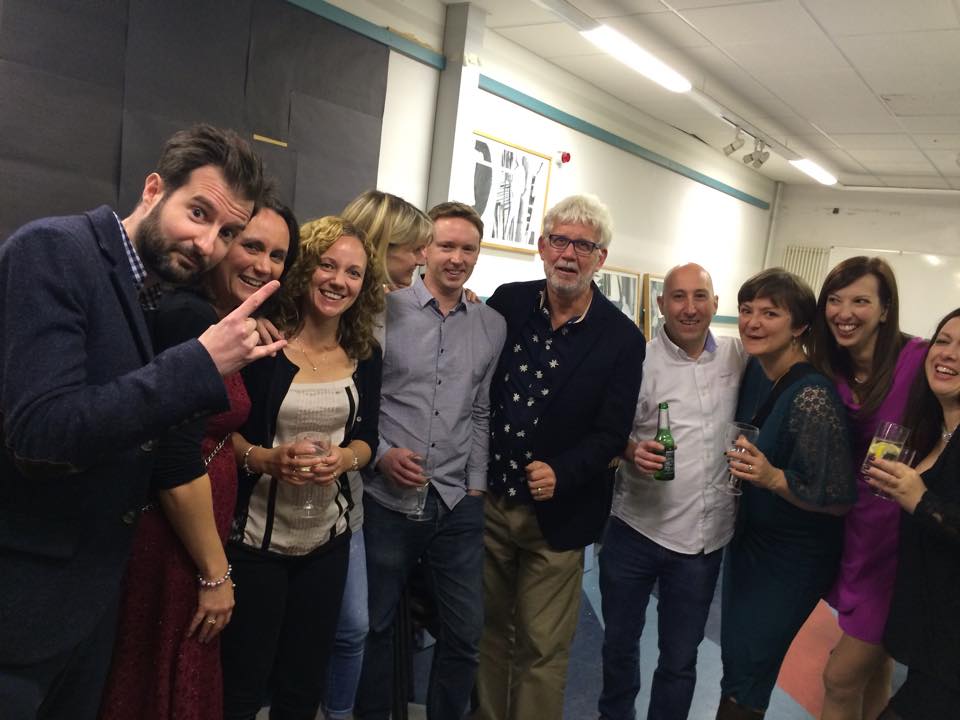 But let me turn to the reason for this blog. I was recently invited back to the school where I enjoyed my first headship – Prudhoe Community High in Northumberland. It’s now 27 years since I was appointed for ten years. High above the Tyne Valley it’s wHere the Emperor Hadrian will have sent his children whilst building his wall. But the reason for going back was to join a reunion of students who left around 1996 so most of them in their late 30s.
One of them remarked that they are now older than I was when I started there as the headteacher. But talking to them reminded me why I do this job and love it. I was moved close to tears as they described their lives and their successes – a lawyer here, a doctor here, an entrepreneur there. Happy family men and women. I was worried I would not recognise them after all this time, but of course I did and as they started talking the rich colour of the days there flooded back. I was amazed at the stories they remembered, the small things that had shaped their interests and built their self-esteem, had inspired their future ambition.
On my return I received a mail from one of them apologising. They said after I’d left they were talking and realised that they had not thanked me – not for making a 5 hour round trip to the reunion – but for the things I had done that had shaped their lives. That at no time did they ever feel like a statistic or part of a crowd. As a teacher, let alone a head, what more could you want as a testament to your work.
There was a downside to the visit though. As I walked in, one young man there said, Mr. Baumber, you expelled me. He seemed to trail me most of the evening reminding me of this. I can barely remember the background to this – incidentally I think he meant suspend not expel – but it made me think that this was the opposite impact. Even though I am sure there was a good reason for this – systematically bullying I think – the effect on him had been long-lived. Before we enjoy the positives we should also remember those for whom the impact of our work might have been the opposite. Of course we can see the wider context of such students creating the environment by which they fail. Of course we can be saddened at the lack of integrated support from other services that means heads have unfortunate options. But we have to recognise the impact you can have on young lives. You have such responsibility in your hands as a head or teacher.
So going back to that first thought. Things have changed in the educational landscape over 40 years, or have they!
Hattie’s fantastic research and analysis of what works in schools, has as far the greatest factor ‘how students perceive themselves’. We as professionals have a significant responsibility to help them fashion that perception. To say there is always a way. To believe that they can achieve more than they imagined. Not to put them in groups or sets that insidiously reduces their thoughts of self worth. To recognise that all people are different and need to find a unique way forward.
Of course this is hard especially where you might have nearly 2000 students in your charge. ‘Individual’ is hardly a word that drives your daily work. But you can create a culture where this happens, you can try to model this in the way you work. It comes down to every relationship, every meeting you have throughout a day. Teachers have more relational events each day than almost anyone. Many are a few seconds, some are to groups rather than individuals but they go on and on. But to leave each one with the other person thinking “he knows me”, or “he understands “, or better still “he believes in me” is paramount. The moments don’t have to be formal, they don’t have to be planned; it can be sitting with them at lunch; it can be casual word in the corridor. Creating a community of respect and high expectations isn’t just the first step, it’s the heart of a great school. And my anecdotal truth behind the assertion is the number of times I meet people who I worked with or taught who tell me things I’ve said, that they remember years on, that I’ve forgotten or thought of little importance. It really matters what you say, and what you do as an educator.
Then there is the organisational bit. Almost all our day-to-day learning had to fit into a prescribed plan, and very often was governed by what the teachers need, or what the system prescribed, or worse still what OFSTED might expect to see. There is much more potential flexibility in the system than most people believe there to be. To listen to what a student wants or needs and allow it, or indeed make the driving force of the school is possible. And this is probably heresy to some, but you can allow students to make choices over pace and depth to meet their own personal goals. Being able to own the journey, is intrinsically more motivating. Don’t we understand anything about how teenage brains are wired? They don’t like being told!
Then there’s the pedagogical bit. There has to be a relevance to learning. Ideally there has to be an emotional attachment to the journey, not a systematic and logical trail through rubrics. We do not all arrive at work enthusiastic to learn. Sometimes learning requires rigour, grit and resilience. You know the saying 10% inspiration, 90% perspiration. But knowing that it is for some purpose or you are surprised by something you did not appreciate ( much neglected awe and wonder ) or it’s a real problem or issue drawing on all your knowledge, makes such a difference to student motivation.
I read an inspirational book many years ago written by Canadian educationalists and called “Beyond Monet: The Artful Science of Instructional Integration” It worked through all the pedagogical techniques you might use and explained why they might work if effectively done. But the big question in the book was is teaching a science or an art. It reaches the conclusion that teaching is the ‘art of applying the science’. Everyday, every group of students, every individual is different from how they were the day before and teachers have to skilfully manipulate and amend their plans to affect good learning. There isn’t a formula.

But there is a concrete and constant message. All children matter. All children deserve respect. All children can achieve more than they expect. They need to trust you and value the relationship you create.
In one of Hattie’s YouTube clips he tells us that our job is never to enable students to reach their potential. It is always to help them exceed it.
So then, as the blog title tells us our job is to ‘Raise Them Up’. It’s a song which has become a bit of a cliché, but for me still remains inspiring. It’s what good teachers and good schools do. See it’s simple. Teaching is a work of the heart!
 Teaching and Learning Without Bounds
Hello Mr. Baumber,
I have accidentally hit upon your blog today. We met at one of the meetings in Kunskapsskolan in Gurgaon, India a few months ago.You agreed to my viewpoint that small kids need to be left alone until the age of ten or even twelve.
Well, I totally confirm to the ideology of KED and am proud to say that my four year stint in Stockholm, Sweden as a Forskare at FTE-KTH taught me many lessons ; both of life and otherwise. I am a teacher by profession , but I teach Undergraduates. The key to good and effective pedagogy , that I have realized, is to treat individual students as INDIVIDUALS and address their issues individually again. Our child is , luckily, enrolled in one of your KED schools in India and we are HAPPY. It was interesting to learn of your experience with the children.
Dr J Lalita / Associate Professor / Department of Electronics / Sri Venkateswara College / University of Delhi / New Delhi-110021.
Very good to read and of course just confirms for me the values that Made you such an inspiration for me on my own journey.
Eddie