Over the last few days we have been in Queensland, Australia. In particular we visited Fraser Island off Hervey Bay – the largest sand island in the world (120 km) and then the coral island at the tip of the Great Barrier Reef- Lady Elliot Island. The thought Paradise surfaced on more than one occasion.
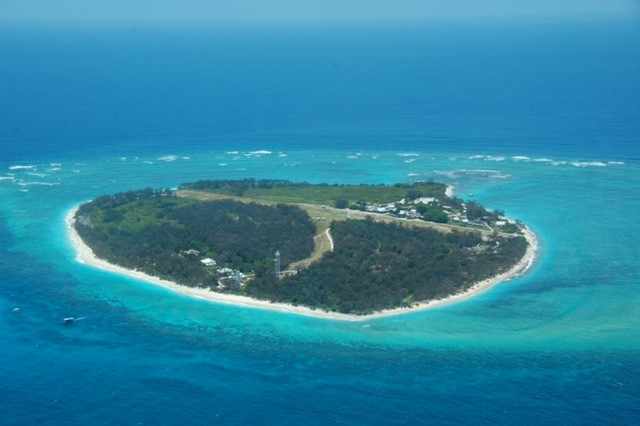
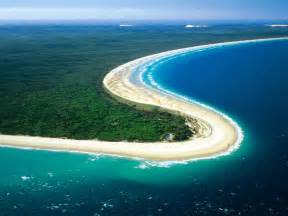
The earliest known name of Fraser island is ‘K’gari’ in the Butchulla people’s language (pronounced ‘Gurri’). It means paradise. According to Aboriginal legend, when humans were created and needed a place to live, the mighty god Beiral sent his messenger Yendingie with the goddess K’gari down from heaven to create the land and mountains, rivers and sea. K’gari fell in love with the earth’s beauty and did not want to leave it. So Yendingie changed her into a heavenly island – Fraser Island.
It is without doubt an amazing place but whilst there on our day’s visit I was worried about how eco sustainable this UNESCO heritage site was. We were treated to a tour in a 4 wheel drive bus with 38 other people. Our driver and guide was amazing and interesting but as we joined the procession of 7 or 8 other such vehicles, I wondered how long this would be paradise.
It was only the next day when we flew to Lady Elliot Island on the Barrier Reef that I realised that the way they are dealing with mass tourism is precisely that – to take people to the honeypot areas. Our flight along its length showed us that this island is massive and 120 + km long and 20 km wide, completely built of sand and covered with immense forests. 95% is totally undisturbed.
Lady Elliot Island first appeared above sea level around 1500 BC as a coral rubble spit. It developed into a mature coral cay over the next 3,000 years. Lady Elliot had endured because bird droppings have hardened together with beach sediments into beachrock.The existence of concentric shingle ridges across the island provides evidence of its formation by progradation over several millennia as deposits were laid down during episodic storms. You have to say that landing there amidst thousands of nesting Noddy Terns, oblivious to our approach, and the amazing turquoise sea fringed with white coral and sand beaches, the word ‘paradise’ does come straight to your mind.
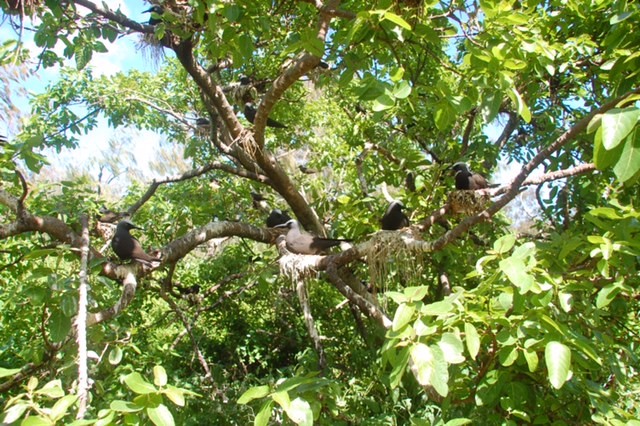
There was nothing to do on the island except relax and enjoy being one with nature – swimming with turtles, snorkelling amongst the reef fish, and toasting on the beach with some good books. Paradise?
Good books/ So three weeks into our 8 week round-the-world tour I’ve actually managed to maintain my reading challenge again of a book a week. And it’s strange how three very different books have impacted on that understanding of ‘paradise’.
I’ve read, ‘Death of Vishnu’ , ‘Letters from Burma by Aung San Suu Kyi’ and ‘Magnetic North’.
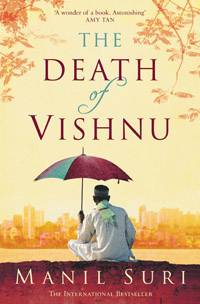

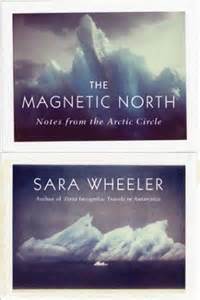
Each book has got me thinking that paradise is not about place, but about self realisation and peace of mind. I’ll try and illustrate this with a short passage from each book.
In Manil Suri’s book Mr. Jalal decided that to reach enlightenment he had to depress his intellect and open his mind to faith.
“Mr. Jalal pulled out all his books on the Buddha and Mahavira Jain and the Hindu sadhus and fakirs. He pored over the accounts about sitting under trees, roaming forests, subsisting on whatever food and water could be found. Wasn’t renunciation the key to what all people had achieved? Hadn’t they succeeded in focusing their minds by denying the needs of their bodies? Could this be the prescription he was himself seeking?”
In the many letters that Aung San Suu Kyi writes is this powerful passage describing guidance that has helped her.
” In my political life I have been strengthened by the teachings of members of the sangha. During my first campaign trip across Burma, I received invaluable advice from monks in different parts of the country. In Prome, a Hsyayadaw told me to keep in mind the hermit Sumedha, who sacrificed the possibility of early liberation for himself alone and underwent many lives of striving that he might save others from suffering. So must you be prepared to strive for as long as might be necessary good and justice.
In a monastery at Pakokku, the advice that an abbot gave to my father when he came to that town more than forty years ago was repeated to me: ‘Do not be frightened every time there is an attempt to frighten you, but do not be entirely without fear. Do not become elated every time you are praised, but do not be entirely lacking in elation. In other words, while maintaining courage and humility one should not abandon caution and self respect.
When I visited Natmauk, my father’s home town, I went to the monastery where he studied as a boy. There the abbot gave a sermon on four causes of decline and decay: failure that which has been lost, omitting to repair that which is damaged; disregard for the need for reasonable economy; and the elevation to leadership of those without morality and learning. The abbot went on to explain how these traditional Buddhist views should be interpreted to build a just and prosperous society.
Magnetic North is a very different book and one that seemed strange to read on a tropical island. It is a journey around the pole looking at how Inuit populations have been subjugated and forcibly moved sometimes for ideological rather than inhuman reasoning. How the environment and he world’s climatic stability have been sacrificed for exploitation of hydrocarbons and other precious resources!
Could anyone think a climate reaching -50C would be paradise? Well so balanced were many of the indigenous people that for them the routine found balance and satisfaction.
The great polar explorer Fridtjof Nansen wrote ” Deep was the silence. Then in the dawn of history, far away in the south, the wakening spirit of man reared its head on high and gazed over the earth… But the limits of the unknown had to recede step by step before the ever increasing yearning after light and knowledge of the human mind, till they made a stand in the North at the threshold of nature’s great ice temple of the polar regions with their endless silence.”
So Lady Elliot Island might seem Paradise, but could I be there every day? Could I be satisfied and happy forever? I doubt it. Is there any place? Perhaps it’s an ingredient; those great quiet places that allow for solitude and peace of thought and mind. I have often imagined finally residing on an island on the Swedish archipelago, sitting in the evening with a nice glass of cool Pinot Gris, listening to Rachmaninov’s Second watching the sun eventually set … or the Northern Lights play. But Paradise would have to be more. I’d have to be at peace with myself. I’d have to be mindful to enjoy every element of life and nature and see the ups and downs of life as being just part of that natural flow.
You could imagine this with a good retirement. But is it possible to achieve paradise in day to day living? Perhaps Paradise is the wrong word , perhaps its Nirvana? Certainly travelling around Myanmar, like many people before me you are moved by how Buddhist philosophy seems to underpin an healthy approach to life. But you know, most religious teaching from a range of faiths have similar messages about relegating self, treating others well, and spending time medicating, praying or renouncing wealth except to see is as a power to do good.
I don’t have Birgitta Ericson any more with whom to have these philosophical conversations; I’m sure she more than anyone else I knew had a personal approach to life that might be seen closest to achieving living paradise! But there are certainly a few other friends and colleagues with similar values systems seeking or working through to a sort of nirvana to challenge ourselves . We all will have people we admire who seem to have held on to a strong sense of moral purpose that brought peace and enlightenment . Being human, most were flawed in some way – Lawrence of Arabia, Gandhi, even Nelson Mandela and Martin Luther King. Its good to know that we all have demons or weaknesses to overcome. We are complex beings.
But we have personal duty to be that calm place in the storm of this world. Surely achieving personal enlightenment should not be a selfish quest, but the base to achieve and value what is right in our lives and world. Paradise will be lost if we don’t fight for it.
So lets round off with the opening lines of Milton’s epic poem ‘Paradise Lost’:
Of man’s first disobedience, and the fruit
Of that forbidden tree, whose mortal taste
Brought death into the world, and all our woe,
With loss of Eden, till one greater man
Restore us, and regain the blissful seat,
 Teaching and Learning Without Bounds